Your TikTok ad budget just disappeared, and you're not sure where it went. This scenario frustrates countless marketers who dive into TikTok advertising without understanding the platform's cost structure.
With over 1.6 billion active users and engagement rates that surpass every other social platform, TikTok represents a goldmine for advertisers. However, success requires more than just viral content—you need to understand exactly what drives your costs.
This comprehensive guide reveals everything about TikTok ads costs in 2026. Moreover, you'll discover proven strategies to reduce spend while maximizing return on ad spend (ROAS).
Understanding TikTok Ads Costs in 2026
Current TikTok Advertising Rates
TikTok ads costs remain remarkably competitive compared to Meta and Google platforms. Most advertisers experience the following average rates:
Cost Per Click (CPC): $0.30 – $1.50
Cost Per Thousand Impressions (CPM): $5.00 – $12.00
Cost Per Engagement (CPE): $0.01 – $0.07
Cost Per App Install (CPI): $0.50 – $1.80
These ranges represent baseline averages across industries. Your actual costs vary based on targeting precision, creative quality, and competitive dynamics in your niche.
Why TikTok Remains Cost-Effective
TikTok's algorithm efficiency delivers higher reach and engagement at lower prices than competing platforms. The platform rewards authentic, native-style content with better distribution and lower costs.
Furthermore, TikTok's younger user base exhibits higher engagement propensity. Users actively seek entertaining content rather than passively scrolling, which improves ad performance naturally.
According to data from TikTok for Business, creative quality accounts for 60% of campaign success. This means smart advertisers can achieve exceptional results without massive budgets.
Key Factors That Impact TikTok Ads Costs
1. Audience Targeting Precision
TikTok ads costs increase significantly with targeting specificity. Broad audiences allow the algorithm to optimize delivery efficiently, keeping CPC low. Conversely, niche audiences face higher costs due to limited inventory.
TikTok's 2026 targeting capabilities include:
- Demographics (age, gender, income, location)
- Interests and behaviors
- Device and connection types
- Creator-based lookalike audiences
- Custom audiences from pixel or CRM data
Strategic Insight: Start with broad targeting to gather performance data. Then, use platforms like Admetrics to identify which segments deliver the best ROAS before narrowing your focus.
2. Industry Competition Levels
Your industry dramatically affects TikTok ads costs. High-competition niches pay premium prices for the same impressions.
High-Competition Industries: E-commerce, beauty, fashion, fitness, gaming, and fintech typically see CPCs at the higher end of the spectrum.
Moderate-Competition: Education, travel, and home improvement maintain mid-range costs with solid conversion potential.
Lower-Competition: B2B SaaS, local services, and niche consulting often enjoy lower CPCs but require stronger creative storytelling.
If you operate in a crowded space, exceptional creative quality becomes your competitive advantage. Authentic, engaging content can offset higher baseline costs. Here is all you need to know about the latest TikTok advertising trends.
3. Campaign Objectives and Goals
Your chosen campaign objective directly influences TikTok ads costs. The platform optimizes delivery differently based on your stated goal:
Awareness Campaigns: $4–$10 CPM for maximum reach
Traffic Campaigns: $0.40–$1.20 CPC for website visits
Conversion Campaigns: $1.00–$2.50 CPC for purchases or leads
App Install Campaigns: $0.50–$1.80 per install
Engagement Campaigns: $0.01–$0.07 per interaction
Conversion campaigns cost more per click but deliver the highest ROI when properly optimized. Therefore, choose objectives that align with your actual business goals, not just lower cost metrics.
4. Ad Format Selection
TikTok offers multiple ad formats, each with distinct cost profiles:
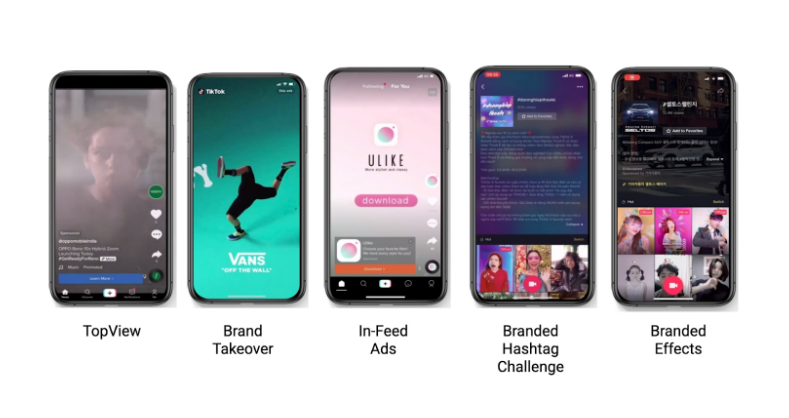
In-Feed Ads appear natively in users' "For You" feeds. They represent the most cost-efficient option for most advertisers.
Spark Ads amplify existing creator content or organic posts. This format typically delivers better engagement at lower costs because it feels authentic.
TopView Ads play immediately when users open the app. This premium placement commands higher CPMs but guarantees massive reach.
Branded Hashtag Challenges drive large-scale engagement but require significant investment. CPMs often exceed $15 for these campaigns.
Branded Effects offer interactive AR filters with variable pricing based on customization complexity.
For performance marketers and SMBs, In-Feed and Spark Ads remain the most scalable, cost-effective choices.

5. Creative Quality and Relevance
TikTok's algorithm rewards native-style, engaging content with better distribution and lower costs. Poorly performing ads lose impressions quickly and require higher bids to maintain visibility.
Keep videos short (6–15 seconds for optimal performance). Incorporate trending sounds naturally. Include strong hooks within the first two seconds to capture attention immediately.
Content Best Practices:
- Use vertical 9:16 format
- Add captions for sound-off viewing
- Feature real people over polished production
- Test multiple hooks and angles weekly
High-quality creative doesn't just improve engagement—it directly reduces your TikTok ads costs through better relevance scores. Learn how to use TikTok hashtags.
Seasonal Cost Fluctuations and Timing Strategy
High-Competition Periods
TikTok ads costs spike dramatically during peak retail seasons. Expect CPC and CPM increases of 20–40% during these periods:
Q4 Holidays: Black Friday, Cyber Monday, and Christmas shopping season create intense competition. CPMs often reach $15–$20 in competitive niches.
Back-to-School: Late July through September sees increased spending from education, fashion, and electronics advertisers.
Valentine's Day and Mother's Day: Gift-focused campaigns drive temporary cost increases in relevant categories.
Product Launch Seasons: When major brands launch products, costs increase across related categories. Learn more about how to drive website traffic with TikTok.
Off-Peak Opportunities
January through March and mid-summer months (June–August) typically offer 15–30% lower CPMs. These windows provide excellent opportunities for testing new audiences and creative concepts.
Smart advertisers use off-peak periods to gather performance data and refine targeting. Then, they scale aggressively during high-converting seasons with proven strategies.
Timing Tip: Use Admetrics to monitor real-time CPM trends and automatically reallocate budgets to months with lower competition.
Setting and Managing Your TikTok Ads Budget
Starting Budget Recommendations
Begin with $20–$50 per day per campaign for initial testing. This budget allows TikTok's algorithm to gather sufficient data for optimization without excessive risk.
Once performance stabilizes and you identify profitable audiences, scale to $100–$200 per day. This investment level enables consistent optimization and meaningful results.
Budget Allocation Framework
Distribute your TikTok ads costs strategically across different objectives:
- 20% for testing: New creatives, audiences, or ad formats
- 70% for proven winners: Campaigns with established positive ROAS
- 10% for experiments: Retargeting, new platforms, or innovative approaches
This framework balances growth with stability. You continuously test new opportunities while maximizing returns from proven strategies.
Bidding Strategy Selection
TikTok offers multiple bidding options that significantly impact your costs:
Automatic Bidding lets TikTok optimize delivery for best results. This option works perfectly for beginners who lack historical performance benchmarks.
Cost Cap maintains your cost per result within a target range. Use this when you know your target customer acquisition cost (CAC).
Bid Cap manually limits maximum bids. This advanced option works best for large-scale advertisers with extensive performance data.
Strategic Recommendation: Start with automatic bidding, then transition to Cost Cap once you understand your conversion economics. Use Admetrics' real-time monitoring to identify when campaigns begin under-delivering.
Creative Excellence: The Secret to Lower TikTok Ads Costs
Why Authenticity Wins
TikTok users expect relatable, entertaining, and visually engaging content. Unlike Meta or Google, polished corporate content typically underperforms. Therefore, authenticity reduces costs while improving engagement.
Content Best Practices for 2026
Hook Fast: Use pattern interrupts or curiosity gaps within the first two seconds. Viewers decide instantly whether to keep watching.
Leverage UGC: Collaborate with micro-influencers or customers for native-style videos. User-generated content feels authentic and typically costs 30–50% less to produce.
Optimize Captions: Keep them short, keyword-rich, and compelling. Many users watch with sound off, making captions essential.
Add Clear CTAs: "Shop Now," "Learn More," or "Try It Today" drive conversions. However, integrate them naturally rather than forcing aggressive sales messages.
Refresh Frequently: Update creatives every 2–3 weeks to avoid ad fatigue. Fresh content maintains engagement and stable costs.
The Cost Advantage of Quality
Higher engagement rates improve relevance scores. Better relevance scores lower CPC and CPM rates. Therefore, investing in quality creative actually reduces TikTok ads costs while improving results.
Performance Insight: Ads with above-average watch-through rates often cost 40–60% less per conversion than poorly engaging content.
TikTok vs. Other Advertising Platforms: Cost Comparison
Comprehensive Platform Analysis
Understanding how TikTok ads costs compare to alternatives helps optimize your overall marketing budget:

TikTok consistently delivers superior engagement-to-cost ratios. This advantage proves especially valuable for creative storytelling and influencer collaborations.
When TikTok Makes Strategic Sense
TikTok excels for brands targeting audiences under 45, particularly Gen Z and younger millennials. Additionally, products that benefit from demonstration or lifestyle positioning perform exceptionally well.
However, B2B services with longer sales cycles might find LinkedIn or Google Search more cost-effective for lead generation. Always test multiple platforms to determine optimal budget allocation.
Advanced Cost Optimization Techniques
1. Structured A/B Testing
Run systematic experiments on every element that affects TikTok ads costs:
- Video hooks and opening frames
- Captions and call-to-action phrases
- Music or sound effects
- Audience segments and targeting parameters
- Ad placement (In-Feed vs. Spark Ads)
Use statistically significant sample sizes. Admetrics automatically identifies winning variants and reallocates spend to maximize efficiency without manual monitoring.
2. Strategic Retargeting
Retarget viewers who engaged with your content, visited your site, or abandoned carts. Retargeting typically yields 40–60% lower CPCs compared to cold audiences.
Moreover, retargeting audiences convert at 3–5x higher rates. This combination dramatically improves overall campaign economics.
3. Audience Refinement and Lookalikes
Create lookalike audiences from high-value customers or top-performing video viewers. Use Admetrics' attribution data to identify which customer segments convert best, then build lookalikes accordingly.
Furthermore, exclude existing customers from prospecting campaigns. This prevents wasting budget on users who've already converted.
4. Dynamic Creative Optimization
TikTok's Dynamic Creative Optimization (DCO) automatically mixes multiple creative elements—videos, captions, and CTAs—to discover top-performing combinations.
Admetrics complements this with multi-touch attribution. You'll see which creative journey led to each sale, not just which ad received last-click credit. Get your TikTok marketing strategy aligned with info from our comprehensive article.
5. Regular Creative Rotation
TikTok's fast content cycles mean even top-performing ads fatigue within 2–3 weeks. Rotate new creatives frequently to maintain engagement and stable costs.
Set up automated alerts when performance drops below thresholds. This proactive approach prevents cost spikes from fatigued content.
Industry-Specific TikTok Ads Costs Insights
E-Commerce and Retail
High competition but strong ROI potential characterizes e-commerce on TikTok. Fashion, beauty, and accessories perform exceptionally well with authentic influencer content.
Expected Costs: $0.50–$1.50 CPC, $6–$12 CPM
Optimization Focus: Product demonstration videos, unboxing content, and influencer partnerships deliver the best results.
Mobile Apps and Gaming
TikTok remains one of the most cost-efficient channels for app installs. Gamified creatives and short, looping gameplay clips drive strong conversions.
Expected Costs: $0.50–$1.80 CPI
Strategy Tip: Show actual gameplay within the first 3 seconds. Users need immediate understanding of your app's value proposition.
Service-Based Businesses
Consulting, fitness coaching, and real estate benefit from lower CPMs but require stronger storytelling. Video testimonials and transformation stories work best.
Expected Costs: $0.40–$1.20 CPC, $5–$10 CPM
Content Approach: Focus on before/after stories, client testimonials, and educational snippets that demonstrate expertise.
B2B Campaigns
Though smaller audiences mean higher CPCs ($1.50–$3.00), conversion value is significantly higher. Leverage educational short-form videos, webinars, and thought leadership clips.
Strategic Consideration: B2B buyers require longer nurture sequences. Use TikTok for top-of-funnel awareness, then retarget through LinkedIn or email for conversion.

Common Budgeting Mistakes That Increase TikTok Ads Costs
Stopping Campaigns Too Early
TikTok's algorithm needs 3–5 days or approximately 50 conversions for full optimization. Many advertisers panic and pause campaigns before the learning phase completes.
This premature stopping wastes the initial learning investment. Therefore, commit to minimum testing periods before evaluating performance.
Ignoring Mobile Optimization
Approximately 95% of TikTok traffic comes from mobile devices. A slow or poorly formatted landing page destroys ROAS regardless of ad quality.
Ensure your landing pages load in under 2 seconds on mobile. Use large buttons, minimal form fields, and clear value propositions.
Skipping Conversion Tracking
Without TikTok Pixel or server-side tracking, you're flying blind. Many advertisers rely solely on platform reporting, which misses significant conversion data.
Implement comprehensive tracking through Admetrics to capture every conversion touchpoint accurately. This complete view enables smarter budget decisions.
Neglecting Creative Refresh
Ad fatigue raises CPCs and lowers CTRs dramatically. Many advertisers run the same creative for months, wondering why costs keep increasing.
Update visuals every 2–3 weeks minimum. Even minor variations help combat fatigue while maintaining brand consistency.
How Admetrics Optimizes Your TikTok Ads Costs
Real-Time Cost Tracking
Connect your TikTok Ads account directly to Admetrics. Monitor CPC, CPM, CTR, ROAS, and conversions in real time without manual spreadsheet updates.
This immediate visibility enables faster optimization decisions. You'll spot cost spikes or performance drops within hours, not days.
Unified Cross-Channel Dashboard
View TikTok, Meta, Google, and other platform performance side by side. Admetrics highlights your top-performing creatives, audiences, and campaigns automatically across all channels.
This comprehensive view reveals which platforms deliver the best results for specific products or audiences. Consequently, you optimize budget allocation across your entire marketing mix.
Accurate Multi-Touch Attribution
TikTok's native reporting often over- or under-attributes conversions due to last-click bias. Admetrics' pixel plus server-side tracking provides a complete view of every customer touchpoint.
See exactly which TikTok ads initiated purchase journeys, even when customers convert through different channels later. This accuracy prevents cutting successful campaigns that appear unprofitable in platform reporting. Third-party tools differ widely in how they recover that signal — we put 10 attribution platforms side by side on tracking accuracy and channel coverage. Understand how to scale TikTok ads.
ROI and CAC Insights
Calculate true customer acquisition costs and lifetime value automatically. Admetrics factors in all marketing touchpoints, product costs, and attribution complexity.
These insights enable smarter budget decisions. You'll know exactly which TikTok campaigns profitably acquire customers at scale.
Smart Scaling Automation
Set custom rules that execute automatically:
- Increase budgets for high-ROAS campaigns without manual intervention
- Pause underperforming ads before they waste significant spend
- Receive creative fatigue alerts before costs spike
- Reallocate budgets to top-performing audience segments
With Admetrics, scaling your TikTok ads becomes a data-driven process rather than guesswork and manual monitoring.
Conclusion
TikTok ads costs remain remarkably competitive, with average CPCs between $0.30–$1.50 and CPMs averaging $5–$12. This cost efficiency, combined with unmatched engagement rates, makes TikTok essential for brands targeting younger audiences.
Success requires more than just budget allocation. You need authentic creative that resonates with TikTok's unique culture, strategic audience targeting, and continuous optimization based on accurate performance data.
Most importantly, you need visibility into true campaign performance. Platform reporting alone misses crucial attribution data that determines real profitability.
Ready to maximize your TikTok advertising ROI? Connect your campaigns to Admetrics today for real-time cost tracking, accurate multi-touch attribution, and automated scaling that turns ad spend into predictable, profitable growth.
Frequently Asked Questions: Navigating TikTok Ad Costs in 2026
Based on the 2026 advertising landscape outlined in the article, here are 10 in-depth FAQs to help you understand and optimize your TikTok ad spend.
What are TikTok ads costs?
TikTok ads costs average $0.30–$1.50 per click and $5–$12 per 1,000 impressions. However, actual costs vary significantly based on audience targeting precision, industry competition, campaign objectives, and creative quality. E-commerce brands typically pay higher rates due to competition, while B2B advertisers often see elevated CPCs but higher conversion values.
Are TikTok ads cheaper than Instagram advertising?
Yes, TikTok ads costs are generally 20–40% lower than Instagram for equivalent reach. TikTok typically offers lower CPC ($0.30–$1.50 vs. $0.40–$2.00) and CPM ($5–$12 vs. $8–$16) rates while delivering 2–3x higher engagement rates. This makes TikTok more cost-efficient for e-commerce and DTC brands focused on creative storytelling.
How much budget do I need for TikTok advertising?
Start with $20–$50 per day for testing new campaigns and audiences. Once you identify profitable segments, scale to $100–$200 per day for consistent optimization. Allocate 70% to proven campaigns, 20% to testing, and 10% to experimental approaches. This framework balances risk with growth potential while managing TikTok ads costs effectively.
What factors affect TikTok ads costs the most?
Five factors primarily drive TikTok ads costs: audience targeting precision (niche audiences cost more), industry competition levels, campaign objectives (conversions cost more than awareness), ad format selection, and creative quality. Additionally, seasonal demand during Q4 holidays and back-to-school periods can increase costs by 20–40% temporarily.
How can I reduce my TikTok advertising costs?
Reduce TikTok ads costs by creating authentic UGC-style content that drives high engagement, refreshing creatives every 2–3 weeks to combat fatigue, using automatic bidding initially, leveraging retargeting for warm audiences, and implementing Admetrics' attribution insights to identify truly profitable campaigns. Additionally, test during off-peak months (January–March) when competition is lower.
What are the baseline costs for running TikTok ads in 2026?
While costs fluctuate based on your niche and creative quality, TikTok remains highly competitive. The average baseline metrics for 2026 are:
- Cost Per Click (CPC): $0.30 to $1.50
- Cost Per Thousand Impressions (CPM): $5.00 to $12.00
- Cost Per Engagement (CPE): $0.01 to $0.07
- Cost Per App Install (CPI): $0.50 to $1.80
Why is TikTok advertising generally cheaper than Meta or Google?
TikTok's cost-efficiency stems from its algorithm and user behavior. The algorithm heavily rewards authentic, highly engaging, native-style content with better organic distribution, which drives down paid costs. Additionally, TikTok's user base is highly active—they log on specifically to be entertained rather than to passively scroll. This naturally higher engagement rate results in superior engagement-to-cost ratios compared to older platforms.
How does audience targeting precision affect my CPC and CPM?
There is a direct correlation between how specific your targeting is and how much you pay.
- Broad Targeting: Allows TikTok’s algorithm maximum flexibility to find conversions efficiently, keeping your CPC and CPM low.
- Niche Targeting: Restricts the algorithm's inventory. Because you are competing for a smaller, highly specific pool of users, your costs will increase.Strategy: Start broad to gather initial data, then use analytics tools to identify the most profitable segments before narrowing your focus.
Which ad formats provide the best ROI without draining my budget?
For most performance marketers, Direct-to-Consumer (DTC) brands, and SMBs, In-Feed Ads and Spark Ads are the most scalable and cost-effective choices.
- In-Feed Ads: Appear seamlessly in the "For You" feed and are highly cost-efficient.
- Spark Ads: Allow you to boost existing organic content or creator posts. Because they feel authentic, they typically generate the highest engagement at the lowest cost.Premium formats like TopView or Branded Hashtag Challenges require massive upfront investments and yield CPMs often exceeding $15.
When are TikTok ad costs the highest, and how should I plan for it?
Costs spike significantly—often by 20% to 40%—during high-competition retail seasons.
- Peak Seasons: Q4 (Black Friday, Cyber Monday, Holidays), Back-to-School (late July–September), and major gifting holidays (Valentine's Day, Mother's Day).
- Off-Peak Windows: January through March, and mid-summer (June–August).Strategy: Use the cheaper off-peak months to heavily test new creatives and audiences. Once you have proven winners, scale those specific campaigns aggressively during the expensive peak seasons.
What is the recommended framework for testing and scaling my ad budget?
You do not need a massive budget to start, but you do need a structured allocation:
- Testing Phase: Start with $20 to $50 per day per campaign. This provides the algorithm enough data to optimize without risking too much capital.
- Scaling Phase: Once performance stabilizes, push the budget to $100 to $200 per day.
- Budget Allocation: Dedicate 70% of your total budget to proven, profitable campaigns, 20% to testing new creatives or audiences, and 10% to wild-card experiments (like new ad formats).
Why is pausing a campaign after just two days a costly mistake?
TikTok's machine learning algorithm requires a "learning phase" to figure out who is most likely to click and convert on your ad. This phase typically requires 3 to 5 days or approximately 50 conversions to complete. If you panic and pause a campaign after 48 hours because costs look high, you waste the initial financial investment of that learning phase before the algorithm has a chance to optimize and lower your CPA.
How exactly does creative quality lower my actual ad costs?
TikTok operates on a relevance-score system. If your ad is highly engaging (e.g., high watch-through rates, likes, shares), TikTok's algorithm deems it relevant and rewards it with cheaper distribution. Conversely, boring or overly "corporate" ads lose impressions rapidly, forcing you to bid higher just to maintain visibility. High-quality, User-Generated Content (UGC) can reduce your cost per conversion by 40% to 60% compared to poorly performing assets.
Why is regular "creative rotation" mandatory for maintaining a stable budget?
On TikTok, content is consumed at a breakneck pace, leading to rapid "ad fatigue." Even your most profitable, viral ad will exhaust its audience within 2 to 3 weeks. When an audience gets tired of seeing the same video, your Click-Through Rate (CTR) plummets and your CPC skyrockets. Rotating fresh creatives into your campaigns every couple of weeks is essential to keep engagement high and costs stable.
Why should I use third-party tools like Admetrics if TikTok provides its own analytics?
Relying solely on TikTok's native reporting leaves you vulnerable to "last-click bias," where TikTok only takes (or gives) credit for the final touchpoint before a sale. Third-party tools offer multi-touch attribution, showing you exactly how your TikTok ads initiated a customer journey, even if they eventually converted via a Google Search two days later. This prevents you from mistakenly pausing a top-of-funnel TikTok campaign that is actually driving your overall profitability.